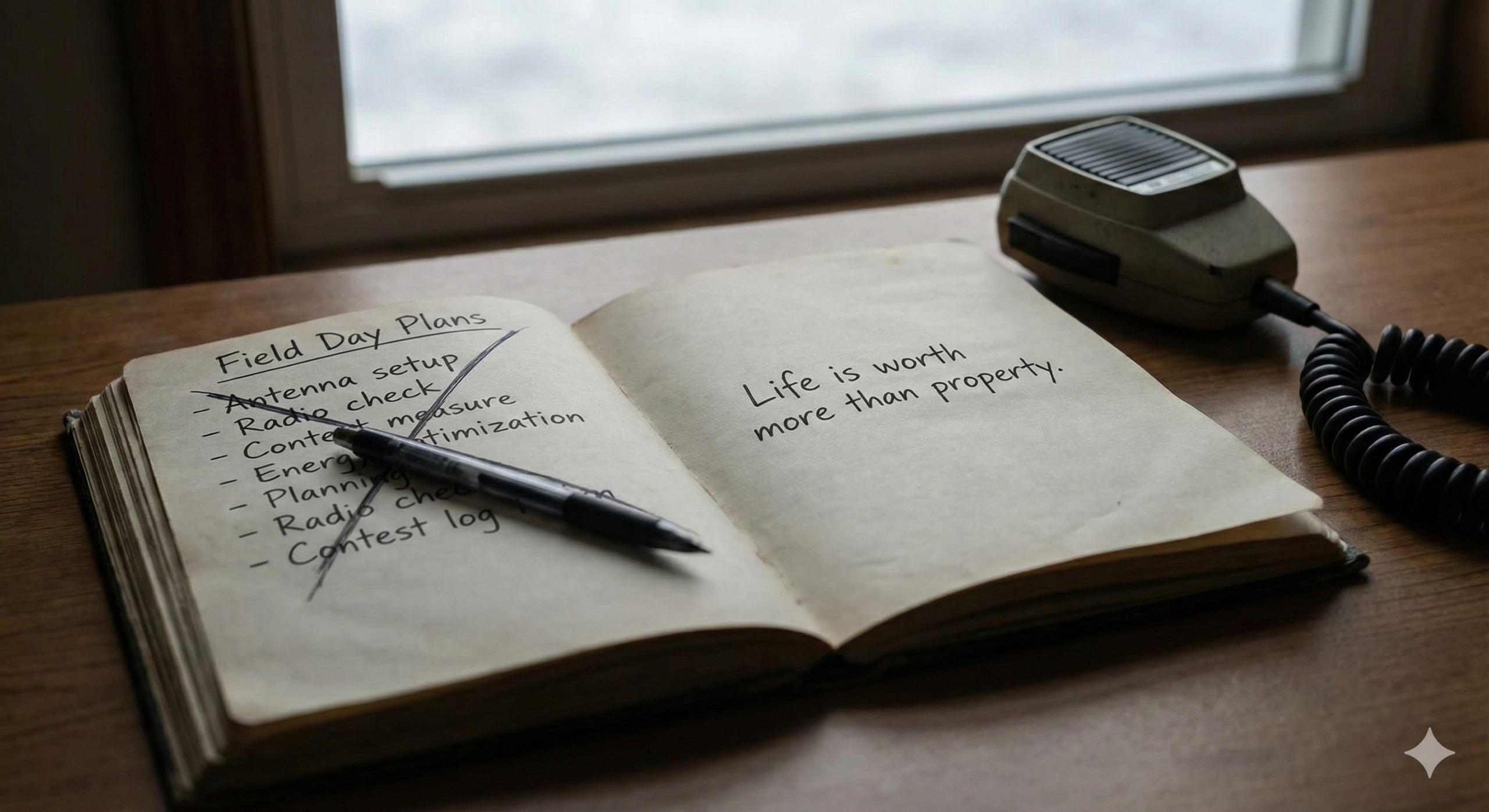
Life is, above all else, an exercise in uncertainty.
Just yesterday, my world was filled with a very specific kind of anticipation. I was ready. The gear was packed, the antennas were prepped, and I was mentally prepared to head out to Navsari. The plan was simple and joyful: participate in the ARSI Field Day and Hilltop contest, connect with friends, and lose myself in the hobby I love.
But this evening, the signal cut out.
I received devastating news that my cousin attempted to end his life by consuming poison. In a split second, the contest, the radio, and the excitement evaporated. There is no point in going to the field now. When life hangs in the balance, hobbies feel incredibly small.
This tragedy has forced me to pause and reflect on the terrifying pressure we put on ourselves and the people we love. It compels me to say something that I believe the world needs to hear right now.
Property is Replaceable. You Are Not.
I firmly believe that if you are burdened by debt, the solution is not to end your life—it is to liquidate what you have. If you owe money, sell your property. Sell the assets. Pay off what needs to be paid so you can breathe again.
We live in a time where we have prioritized money to such an extreme that we mistake it for life itself. This is a fundamental lie. Money is a tool, not a pulse.
Human life is meant for experiencing this world—for seeing it, feeling it, and finding joy in it. It is not meant to be crushed under the weight of ledger sheets. If the choice is between holding onto a piece of land and holding onto your peace of mind, let the land go. If the person is gone, what good is the property? Who are you saving it for?
The Trap of Societal Expectations
I feel that the root cause of this tension is often not just the debt itself, but the fear of society’s judgment. We are terrified of what people will say. Society has these crushing expectations that if a person isn’t meeting a certain standard of material success, they are “useless” or failing their duties.
These expectations can become so heavy that a person starts to believe them. They internalize this judgment until they feel such self-loathing that they do the unthinkable.
We have to break this cycle. We have to accept our limitations.
Defining Your Own “Enough”
I have come to a realization: I don’t need to be the person who accumulates the most. If I can fulfill my responsibilities to the people in my immediate care—if I can put food on the table for my family—that is enough. We must accept this. I am not failing if I am not progressing materially at the same speed as others.
I am ready to set that example. I am content to say, “I earn enough to cover my daily needs, and I am living happily.”
A Final Thought
Suicide is never the solution to a problem. It is a permanent end to a temporary situation.
We need to take a stand—not against our creditors, but against the mindset that tells us we are worth less than what we own. We must live life by our own rules and ethics, not by the yardstick of societal status.
Economic progress is secondary. The joy of living must always be at the center.
Support Resources
If you or someone you know is struggling or in crisis, help is available. You can call the iCall Helpline in India at 9152987821 (Mon-Sat, 8 AM – 10 PM) or the Vandrevala Foundation Helpline at 1860 2662 345 / 1800 233 3330 (24/7).